



Proving Digital ROI: How High-Impact Media Drove a Significant Lift in Purchase Intent for Henkel

As digital marketing becomes increasingly central to consumer decision-making, brands like Henkel are challenged to demonstrate real results beyond standard online metrics. GE Sealants, part of Henkel’s portfolio, was looking to build in-store momentum and awareness for both established and new offerings, including the recently launched Pro Seal Max.

The Challenge: Closing the Attribution Gap

Henkel needed to prove that its national digital ads led to real in-store results, not just online clicks. The main hurdle was showing a clear link between digital ad views and actual purchases, especially with new products where traditional tracking fell short. Our team recognized these gaps and worked to address limitations in existing measurement approaches.

We identified several critical barriers:
Attribution Gaps

Attribution Gaps

Standard tracking methods could not reliably connect a digital ad view to a physical store purchase.
Misleading Metrics

Misleading Metrics

Relying solely on traditional click-through rates (CTRs) painted an incomplete picture of campaign effectiveness.
New Product Familiarity

New Product Familiarity

Introducing newer products like Pro Seal Max required a different measurement approach compared to established products with high baseline awareness.

The Solution: Using Brand Lift to Prove Campaign Effectiveness

The Solution: Using Brand Lift to Prove Campaign Effectiveness

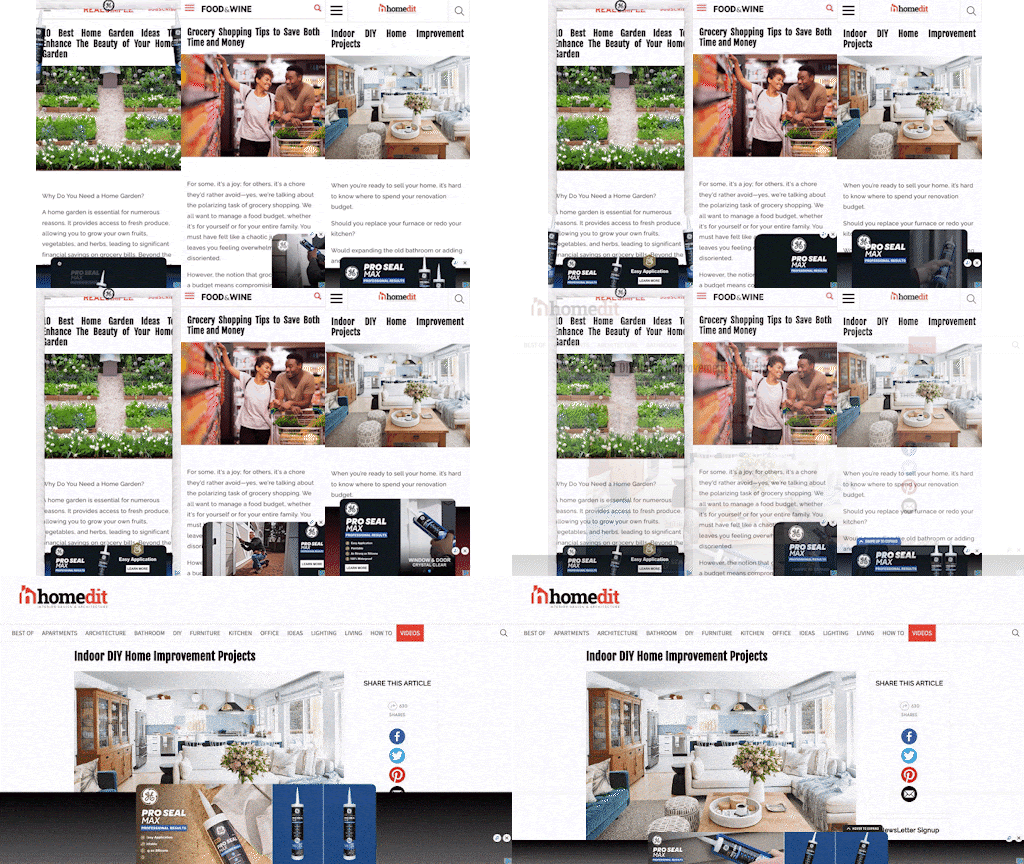
Instead of trying to tie ad views directly to sales, the strategy focused on whether people’s attitudes and purchase intent changed after seeing targeted ads. Henkel ran high-impact ad units through a programmatic partner, GumGum, and used a brand lift study to measure if these ads made an impact.

This study allowed us to evaluate the campaign’s impact on key brand metrics and validate the ROI of the national media efforts. We tested distinct creative approaches, comparing ads featuring familiar silicone-focused messaging against those highlighting the newer Pro Seal Max product.

The Results: Driving Measurable Purchase Intent

The Results: Driving Measurable Purchase Intent

The study proved that high-impact digital ads created a real increase in purchase intent among shoppers, including both Pros and DIYers. While awareness and ad recall remained steady, the campaign delivered a strong lift in intent to buy GE Sealants. Notably, the newer Pro Seal Max ads, even with fewer clicks, still generated a meaningful rise in purchase intent.

Significant Purchase Intent Lift

Significant Purchase Intent Lift: The GE Sealants campaign generated a statistically significant lift in Purchase Intent at an 80% confidence level.

Target Audience Engagement

Among core segments, including DIYers and Home Improvement Professionals, the campaign drove a positive, statistically significant increase in Purchase Intent (80% level).

Stable Baseline Metrics

Aided Awareness and Ad Recall remained stable throughout the campaign.

The True Value of High-Impact Formats

While silicone-focused ads achieved higher CTRs due to existing market familiarity, the high-impact GumGum ad units featuring Pro Seal Max produced a substantial lift in purchase intent. This proved that engagement metrics alone do not fully capture campaign effectiveness, especially when introducing new products.

Conclusion

By using a brand lift study alongside high-impact ads, the team demonstrated that digital campaigns can truly increase purchase intent, even when click rates are low or the product (like Pro Seal Max) is new. This approach delivered proven ROI for Henkel and established a clear strategy for successful future product launches.